
GRC · Architecture
Why GRC platforms need a governance rules engine, not hardcoded workflows
Hardcoded enforcement breaks as soon as the product grows. A data-driven rules engine keeps workflow decisions configurable, auditable, and consistent across modules.
AEK Tech
Enterprise engineering company

Most GRC products start the same way. A few modules. A few approval paths. Enforcement logic sprinkled through services and UI conditionals. It works fine until the product has to grow.
Incidents need different mandatory steps than findings. Vendors need different escalation than policies. Then someone asks for a rule that only applies when residual risk is high and the asset is in scope for ISO 27001. Hardcoded branches do not survive that conversation.
The key focus was not just flexibility, but controlled, predictable enforcement, which is critical in any serious GRC system.
What we changed
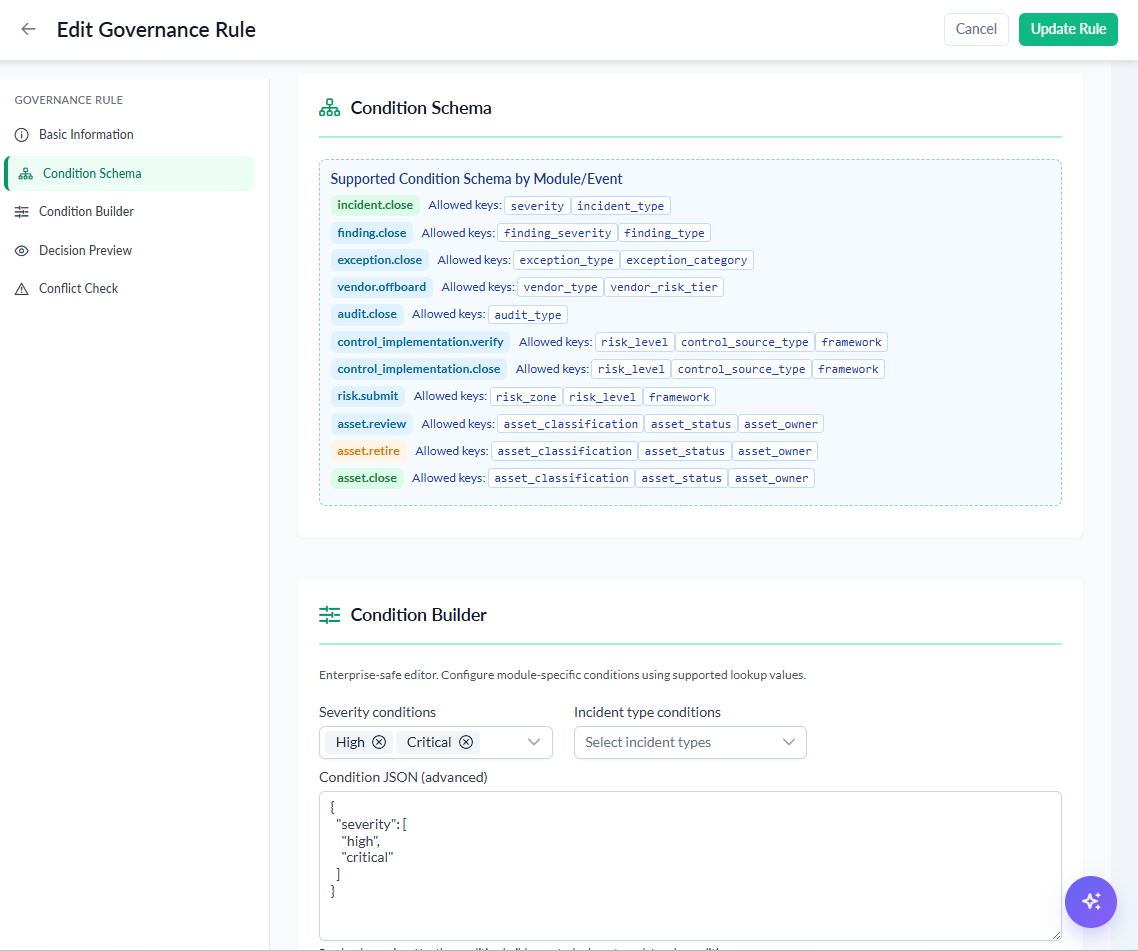
Instead of scattered, hardcoded workflow enforcement, we built a central governance rules engine driven by data. Rules decide when workflows are mandatory. Application code runs the workflows. It does not invent the policy.
- Define when workflows are mandatory using configurable rules
- Keep decisions consistent, auditable, and explainable
- Reuse the same governance logic across incidents, findings, and later modules
- Keep business rules separate from application logic
Why this matters in production
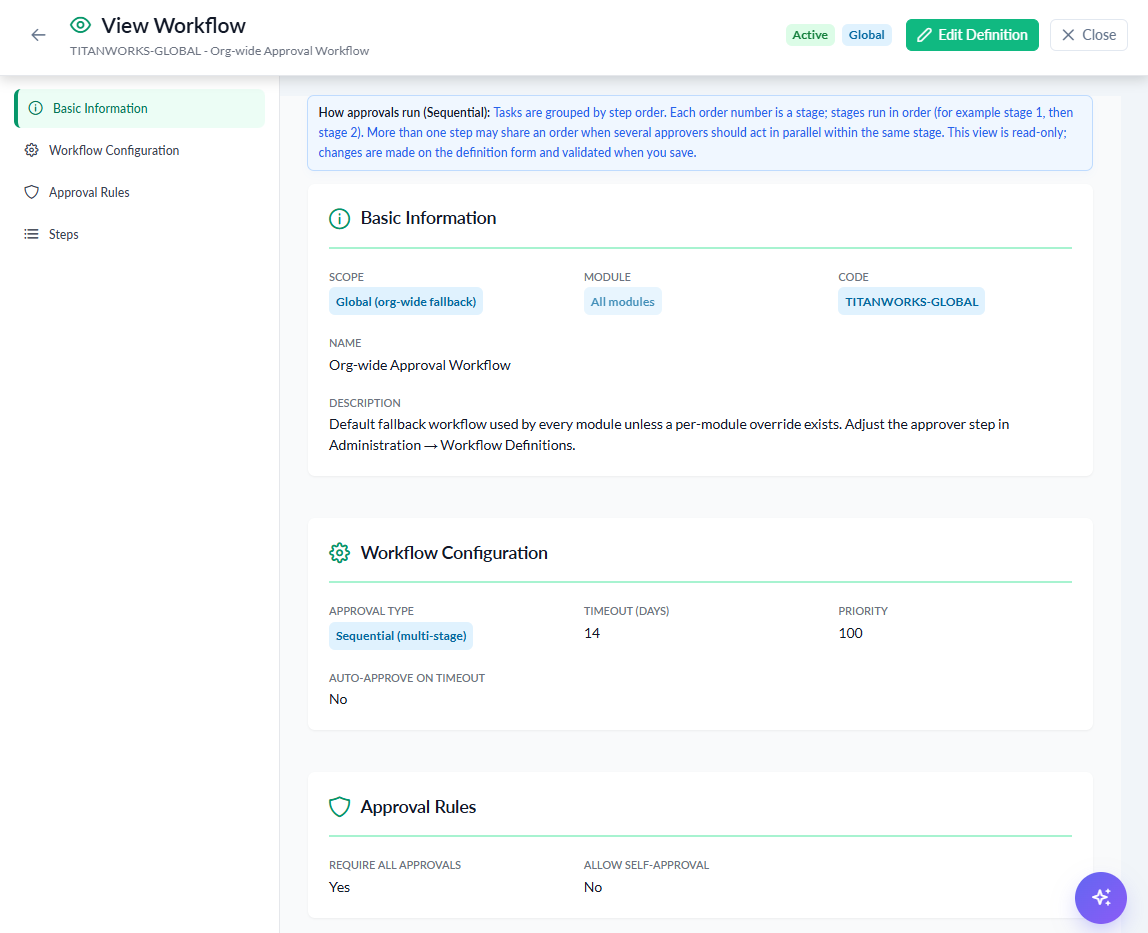
Auditors do not only ask what your policy says. They ask why a particular case took a particular path. A rules engine gives you something concrete to point at: the matching rule, the inputs, and the enforcement that followed.
It also keeps engineering from becoming the bottleneck. Product can change enforcement without a release every time compliance wants a nuance.
The bet we are making
Treat governance like any other domain model worth owning. Versionable config. Clear ownership. An evaluation path that is deterministic. That is how you get a maintainable GRC platform instead of a pile of special cases only the original author understands.
This is the pattern we ship in Enterprise GRC Platform, and the same one we use when we build or rescue GRC systems for others.